

How New York Shops Secondhand: A Walking Guide to the City's Resale Districts
Posted August 2026
📍 ReBloom Field Guide
Location: New York City
Date: August 2026
Focus: NYC Resale, Secondhand Shopping & Market Intelligence
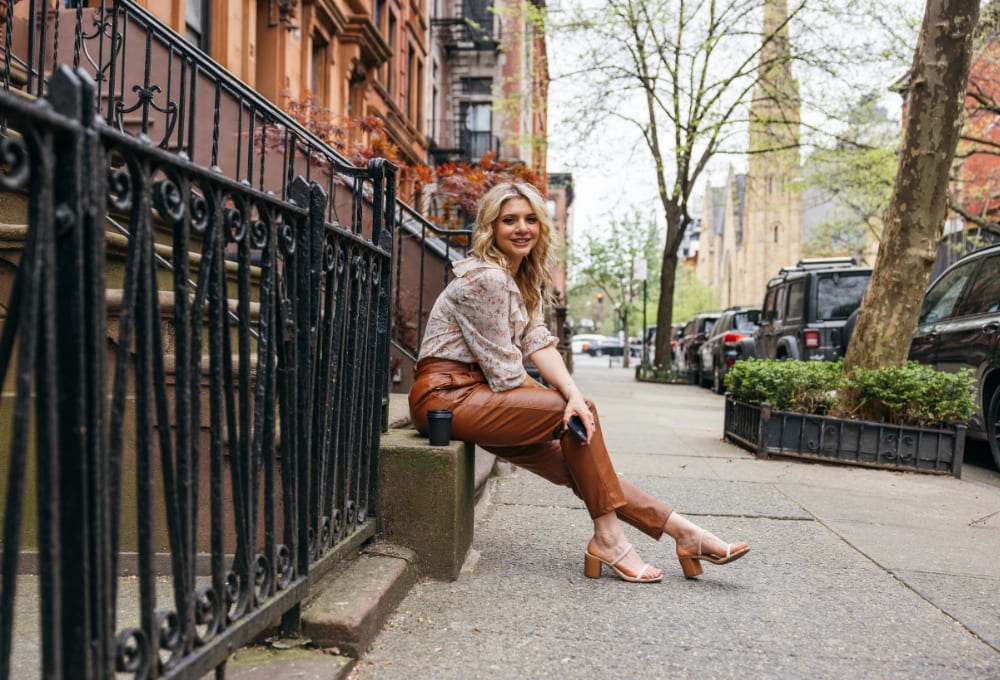
I got off the 1 train at 26th Street with a rough plan, comfortable shoes, and absolutely no idea I was about to walk away with a faux fur jacket I didn't know I needed.
This trip wasn't supposed to be about shopping. I've spent the last several years studying more than 120 resale, consignment, and vintage businesses across the U.S. and Europe, Chicago to New York, London to Milan, Paris to Los Angeles, trying to understand this industry from the inside, not just from a spreadsheet. But somewhere between Chelsea and Brooklyn, research turned into one of the best two days of shopping I've had all year. That's the thing about this work, you go looking for lessons, and you come home with a jacket.

Here's the truth I keep circling back to: every closet is a story, whether it's a curated rack on Bedford Avenue or the one in your own bedroom you haven't opened in months. I think about my own closet a lot these days, what I've kept because I loved it, and what I've kept because letting go felt too much like losing a version of myself. Walking into six strangers' businesses, watching them make peace with what stays and what sells, felt less like research and more like six different women teaching me something about myself, one rack at a time.
It's also a good time to be paying attention. Nearly 80% of Gen Z and Millennial shoppers now say they're already participating in resale in some form, and the secondhand market as a whole is projected to grow two to three times faster than traditional retail over the next couple of years. If it feels like everyone's suddenly talking about thrifting, that's not your imagination. It is just catching up to where the smart shoppers already were.
This walk also became something new for ReBloom: the first-ever ReBloom Closet Walk, the guided store crawl that now caps off every Coffee, Closets & Conversation salon. New York was stop one. Los Angeles is next, September 26, and I already have a list.
Here's how the two days went, store by store, honest reactions included.
Day One: Chelsea
I started in Chelsea on a Thursday afternoon, took the 1 train down from Penn Station, and gave myself the rest of the day to take it slow.
Day 1: Navigating pre-loved luxury and everyday finds in Chelsea
2nd STREET Chelsea — 142 W 26th St.
Walking in felt like stepping into a candy store for vintage everyday finds, racks deep with pre-loved designer pieces, and a genuinely strong selection of Japanese fashion labels you don't stumble across easily in most American resale shops. The whole space had this young, self-expressive energy to it that made browsing feel less like shopping and more like people-watching through clothes.
Housing Works Thrift Shop — 143 W 17th St.
If 2nd STREET was the candy store, Housing Works was the department store for clothes, shoes, books, furniture, all under one roof. This is the TJ Maxx of vintage and resale: you're not guaranteed a specific find, but if you're patient and looking for that one special gem, it's in here somewhere. And every purchase supports Housing Works' mission on top of it.
Day Two: Brooklyn
Friday looked different, daytime, L train to Bedford Ave, four stops packed into a tight, walkable cluster instead of a citywide trek.
Day 2: Exploring Brooklyn's dense cluster of high-end consignment and vintage boutiques
Awoke Vintage — 132 N 5th St.
They open early, 10am, so this was my warm-up stop before the bigger spaces. And it delivered more than I expected — finding a vegan leather bag here was a welcome surprise among curated pieces that ran the gamut, jeans to shorts, jewelry to dresses. A little bit of everything, but never overwhelming.
Beacon's Closet Greenpoint — 74 Guernsey St.
Boy, do I wish I'd had more time here. This is the treasure hunt of treasure hunts, and it's where I found my faux fur jacket and my fall knit dress. Honestly, this store is a day trip all on its own, have brunch, shop Beacon's, go home, wash, and repeat. I could've spent an entire afternoon in here alone.
Amarcord Vintage Fashion — 223 Bedford Ave.
When I tell you they curated to perfection, the best of the best — I mean it. This wasn't just shopping. It was a curated experience and a journey through fashion history. I loved every minute of it.
10 Ft Single by Stella Dallas — 285 N 6th St.
Yes, take me back in time. This is a vintage lover's playground, full stop.
The Receipt
Here's what actually came home with me: a vegan leather purse from Awoke Vintage, a faux fur jacket, and a fall knit dress from Beacon's Closet Greenpoint.
Total, across all three pieces: under $200.
That number is the whole argument, honestly. Three wearable, distinct pieces, from a warm-up stop to a treasure-hunt warehouse for less than a single new coat at retail. This is what "value over trend" actually looks like in practice. Not a slogan. A receipt.
What the Good Ones Have in Common
Walk enough of these stores back to back, and a pattern starts to show through, even with all their differences in size, price point, and specialty.
Condition gets checked before brand. Every single store I walked into inspected and priced on condition first — a designer label in rough shape sold for less than a well-kept no-name piece right next to it. Brand opens the door. Condition sets the price.
Specialization beats breadth, almost every time. The stores with the tightest focus, Amarcord and 10 Ft Single especially, had the most pricing confidence, hands down. When a store knows exactly what it's selling, it knows exactly what to charge for it.
The window is the pricing strategy. What a store puts in its storefront tells you what it thinks is valuable before you ever walk in. A single curated vintage piece in a window says something very different than a rack of denim does.
Density signals turnover. The more tightly packed and fast-moving a store's floor, the more its pricing tends to reward decisiveness. The good pieces don't sit long enough to reward hesitation. Beacon's taught me that lesson in real time.
Nobody treated secondhand as second-best. Not one of these six stores apologized for what they were selling. Pricing, presentation, and inventory decisions were all made with the same confidence you'd expect from a first-hand boutique — because that's exactly what they are.
ReBloom Intelligence Callout
The Window Is the Pricing Strategy. Presentation dictates perceived value before a customer ever touches a tag.
Density Signals Turnover. High volume rewarded with pricing efficiency moves inventory faster.
Presentation Is Part of Value. Curation transforms secondhand items into boutique-level desires.
Secondhand Doesn't Mean Second-Best. Confidence in pricing and inventory sets market leaders apart.
Now Look at Your Own Closet
Here's the part that matters more than any of the six stores above: those same five principles apply to what's hanging in your closet right now.
Condition before brand means that well cared for piece from a lesser-known label may actually be worth more for resale than the beat-up designer item next to it. Specialization beats breadth means a closet with a clear point of view sells and shops better than one that's trying to be everything at once. The window is the pricing strategy. How you photograph and present something you're selling matters just as much as what it actually is. Density signals turnover. The pieces you're not wearing are the ones quietly costing you closet space, and maybe resale value, the longer they sit. And nobody treats secondhand as second-best, including you, when it's your turn to sell.
I'll be honest, writing that last line, I thought about my own closet. The pieces I've held onto because letting go felt like losing a version of myself, not just fabric. If you've got a closet like that too, I see you. You don't have to figure all of it out today. You just have to be willing to look.
The stores I walked did not do anything you can't learn to do with your own closet. They just did it with more confidence, because they've done it more times than you have. That gap is closeable.
Trip Notes | Field Guide
📅 Best Days: Weekday afternoons had noticeably less foot traffic than weekends, which meant more time with sales staff and less competition for fitting rooms.
💳 Cash vs. Card: Every store I visited took cards, but a couple of the smaller vintage shops mentioned they prefer cash for lower-ticket items, worth asking.
🛍 Buying vs. Selling: Most of these stores buy or consign as well as sell, but hours and criteria for that vary from shop to shop. You should call ahead if you're planning to sell rather than just shop.
📍 Route Planning: Splitting Chelsea and Brooklyn across two days, instead of trying to cram everything into one, gave me time to actually look, not just skim racks. If you're short on time, Beacon's Closet alone is worth its own day trip.
Where to Go From Here
If reading about a $200 haul made you want to look at your own closet a little differently, that's exactly the idea behind my Closet-to-Cash Workshop on August 20, a live session on figuring out what you already own is actually worth, and how to price it with the same confidence these stores have.
Ready to Turn Your Closet into Capital?
Learn circular fashion mechanics, pricing strategy, and how to monetize your wardrobe.
Reserve Your Spot — Closet-to-Cash Workshop
And if you're in Los Angeles, the ReBloom Closet Walk heads there next, as part of Coffee, Closets & Conversation on September 26.
Take the ReBloom Experience Offline
Connect with fellow fashion insiders and experience curated market research in real life.
Explore the Experience — Los Angeles Closet Walk
New York didn't just teach me about pricing. It reminded me that we're all just trying to figure out what to keep, what to let go of, and who we're becoming in the process. That's the real work. Turns out, it's also the fun part.
New York was the first stop. It won't be the last. Learn more about ReBloom and our approach to Closet as Culture.
New to resale vocabulary? My Glossary breaks down the real difference between consignment, resale, and vintage. And if you want the fuller story of why ReBloom exists, start with The Closet Revolution Is Already Here.
Keep Exploring ReBloom Resale Intelligence
Join the ReBloom Insider Community to receive our latest field research, market trends, and event invites straight to your inbox:
Resale market insights & consumer behavior trends
Closet strategy & valuation frameworks
Exclusive invitations to Workshops & Closet Walk experiences
Exploration of Closet as Culture
Your Journey to Confident, Conscious Style Starts Here
An email will be sent to the founder
Contact Me
Office location
Chicago, IllinoisSend us an email
[email protected]